Binary options brokers: how to choose a platform you can actually trust
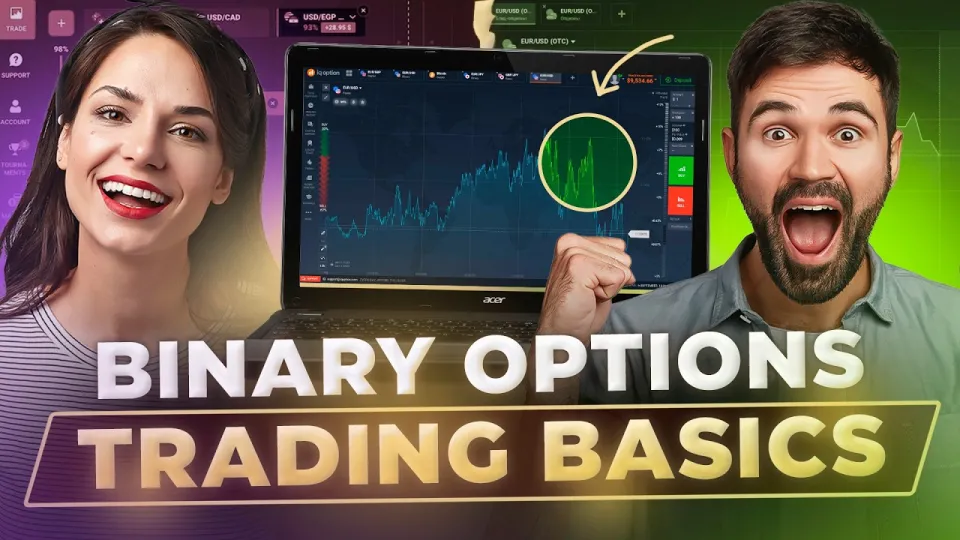
Video: Binary Options for Beginners | Binary Options Brokers | Who Can You Trust?
· based on the channel Binary options brokers
Binary options brokers are platforms where you buy a fixed-time contract on whether an asset's price will be higher or lower at expiry: you stake a set amount, and the broker either pays a fixed percentage (usually 70–95%) or keeps the stake. Choosing one you can trust comes down to four verifiable things — licensing and jurisdiction, withdrawal reliability, payout levels and platform transparency — and the three names most often put in front of beginners are Quotex, Pocket Option and Binarium, with Quotex the usual first recommendation and registrable through this Quotex sign-up link.
What a binary options broker actually does
A binary options broker is the counterparty to every trade, not an exchange. That single fact explains most of the trust questions in this niche: there is no central order book, no third-party clearing house and no exchange price feed you can audit independently in the way you can with stocks or futures. When you open a 60-second or 5-minute contract, the platform quotes a payout, you accept it, and the outcome is settled against the broker's own price feed.
That structure has consequences a beginner should internalise before depositing anything:
- The payout is fixed at entry. If a broker offers 82% on EUR/USD for a 5-minute contract, that is what you get on a win — no more, no less, regardless of how far the price moves.
- Losses are capped at the stake. You cannot lose more than you put in on a single contract, which is why the product is sometimes marketed as "limited risk".
- The house edge is built into the payout. A 50/50 outcome paying 80% means you need a win rate above roughly 55.6% just to break even. That arithmetic, not the interface, is the real opponent.
- The broker controls execution. Slippage, delayed fills and price-feed discrepancies are the practical risks, and they are exactly what a demo account is for testing.
Who can you trust: a four-point checklist for binary options brokers
Trust in this market is earned by documentation and behaviour, not by marketing pages. Run every candidate platform through the same four filters.
1. Licensing and jurisdiction. Check whether the broker names a regulator and a licence number, then verify it on the regulator's own register. Many binary platforms operate under offshore licences (commonly SVG, Mauritius or the Seychelles) rather than tier-one regimes. That is not automatically disqualifying, but it changes your recourse if a dispute arises — an offshore entity gives you almost no practical path to complain to a financial ombudsman.
2. Withdrawal behaviour. Search independent forums and review sites specifically for withdrawal complaints, not for bonus offers. Look for the stated processing time (instant, 1–3 business days, or longer), the minimum withdrawal amount, and whether the broker requires full KYC verification before the first payout. A platform that pays slowly on small amounts will pay slower on large ones.
3. Payout levels and asset list. Compare payout percentages across the same assets on several brokers. Typical ranges are 70–90% on currency pairs, with higher payouts on some indices and crypto pairs and lower ones on short expiries. A broker quoting unusually high payouts on 30-second contracts is usually compensating for something else.
4. Platform transparency. The price chart should match a public reference feed closely, expiry times should be unambiguous, and the demo account should behave the same way as the live one. If the demo fills differently from live trading, that is a red flag worth acting on before you deposit.
Quotex, Pocket Option and Binarium: how the three compare
Quotex, Pocket Option and Binarium are the three platforms most often recommended to newcomers, and they share a similar profile: low minimum deposits, a web-based interface with a mobile app, demo accounts, and a broad asset list spanning currency pairs, crypto, commodities and stocks.
- Quotex is the most frequently cited starting point, largely because of its simple interface, low entry deposit and a demo mode that mirrors live trading. It is the platform most beginner tutorials are built around.
- Pocket Option is known for a social trading layer, a wide asset selection and frequent promotional bonuses. Bonuses deserve caution: they often come with turnover requirements that lock your funds until a trading volume threshold is met.
- Binarium positions itself around a straightforward contract interface and a range of expiries, and is often mentioned alongside the other two in beginner round-ups.
None of these three is a regulated tier-one broker in the EU or UK sense. Treat all of them as offshore platforms where your protection comes from your own risk management and small initial deposits, not from a compensation scheme.
Typical beginner questions and doubts
"Can I withdraw my money, or is the platform rigged?" This is the most common worry, and the honest answer is that it varies by broker and by account status. The practical safeguards are: deposit the minimum, verify your identity early, make a small test withdrawal before scaling up, and keep records of every transaction.
"Do I need a VPN?" Many traders in restricted jurisdictions use one to access platforms, and VPN services are routinely bundled into affiliate offers alongside broker links. Be aware that using a VPN may breach a broker's terms of service and can complicate KYC and withdrawal verification — a genuine risk, not a technicality.
"What is the minimum to start?" Most platforms in this segment accept deposits in the region of $10–$50, and many contracts can be placed from $1. Starting small is not a limitation; it is the correct way to test execution quality.
"How much can I realistically make?" With payouts in the 70–90% range, a 60% win rate on 80% payouts returns roughly 8% of turnover before any losses compound. Anyone promising consistent daily percentages is selling something.
"Is binary options legal where I live?" Retail binary options are banned or heavily restricted in the EU, the UK, the US, Canada, Australia and Israel, among others. Check your local rules first; the platform's willingness to accept your registration is not the same as legality.
Risk management rules that matter more than broker choice
Position sizing decides whether you survive long enough to learn. A workable framework for a beginner account:
- Risk no more than 1–2% of the account balance per contract.
- Cap daily losses at 5% and stop trading when you hit it.
- Trade one or two assets you have studied, not twelve you have not.
- Avoid 30-second expiries; longer expiries reduce the noise-to-signal problem.
- Keep a written log of entry, expiry, stake and outcome for at least 100 trades before judging a strategy.
These rules do not make a losing strategy profitable, but they prevent the account wipe-outs that account for most beginner exits.
All the platforms and tools mentioned
- Quotex registration: https://dakaklik.com/_quotex?creative_id=GZGkCx8QyQQ
- Pocket Option: https://dakaklik.com/_PocketOption?creative_id=GZGkCx8QyQQ
- Binarium: https://dakaklik.com/_Binarium?creative_id=GZGkCx8QyQQ
- NordVPN: https://dakatop.link/Nord_us?creative_id=GZGkCx8QyQQ
Bottom line
Binary options brokers are counterparties, not exchanges, so trust has to be verified through licensing, withdrawal history and platform behaviour rather than through payout advertising. Quotex, Pocket Option and Binarium are the three names beginners encounter most often, and each is best approached with a minimum deposit, an early test withdrawal and strict position sizing. The arithmetic of fixed payouts — needing roughly a 55% win rate to break even at 80% payouts — is the constraint that no broker choice can remove. The channel Binary options brokers walks through these platforms in video form, and if you want to start on the platform it recommends first, you can open a Quotex account here.
Key takeaways
- Binary options are fixed-time contracts: you stake an amount, predict direction, and win a fixed payout (typically 70–95%) or lose the stake.
- Quotex, Pocket Option and Binarium are the three platforms most frequently recommended to beginners in the niche.
- Payout rate is only one metric: withdrawal speed, minimum deposit and account verification matter just as much.
- A demo account with virtual funds should be used before any real deposit.
- Binary options are banned or restricted for retail clients in the EU, UK, US and several other jurisdictions.
Source: Binary Options for Beginners | Binary Options Brokers | Who Can You Trust? · Markdown version
Questions & answers
Are binary options brokers regulated?
It depends entirely on the broker and your jurisdiction. Many binary platforms operate under offshore licences in Saint Vincent and the Grenadines, Mauritius or the Seychelles, which offer little practical recourse in a dispute. Retail binary options are banned or restricted in the EU, UK, US, Canada, Australia and Israel, so check local rules before registering.
How much money do I need to start trading binary options?
Most platforms in this segment accept deposits from around $10–$50, and individual contracts can often be placed from $1. Starting with the minimum and testing a withdrawal early is the sensible approach, since it verifies that payouts actually process.
What payout percentage should I expect from a binary options broker?
Typical payouts run from about 70% to 90% on currency pairs, with some indices and crypto assets higher and short expiries lower. At an 80% payout you need a win rate above roughly 55.6% just to break even, so payout level and win rate have to be assessed together.
Can I use a VPN to access a binary options broker?
Some traders do use a VPN to reach platforms restricted in their country, but this can breach the broker's terms of service and complicate identity verification and withdrawals. Being able to register is not the same as being legally permitted to trade there.